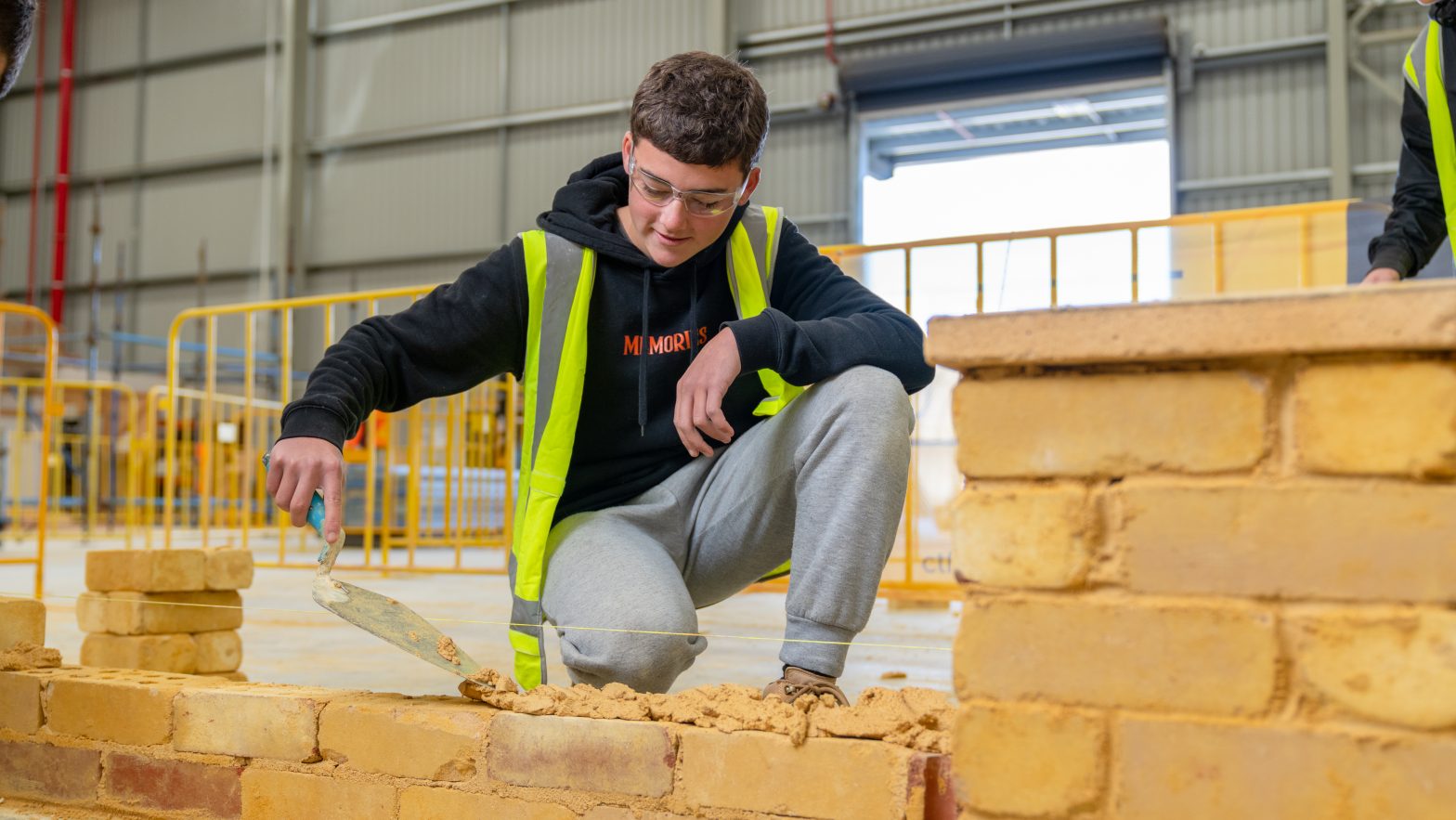
Whilst commonly referred to as a bricklaying apprenticeship, an apprenticeship in this area covers both, and the full name of the course is the CPC30111 Certificate III in Bricklaying / Blocklaying.
Brick vs Block: What is the difference, Which is better?
Choosing the right building material is crucial for any construction project. This article examines the key differences between brick and block in construction. We’ll compare their composition, characteristics, and uses, helping you decide which material is better suited for your project.
What is the difference between brick and blockwork?
The main difference between brick and blockwork is that bricks are typically composed of clay, sand, lime, and concrete materials, which are moulded and fired in kilns. Whereas concrete blocks are produced from a mixture of cement, water, and aggregates such as crushed sand or stone, which are then formed and cured without firing.
Bricks are typically made from fired clay and are generally 76mm x 230mm x 110mm in size, whereas blocks are made from concrete and are generally 390mm x 190mm x 190mm in size.
Brick Characteristics:
- Size: In Australia, the standard dimensions are 76mm high x 230mm long x 110mm wide
- Material: Usually fired clay, sometimes concrete-based
- Appearance: Often reddish or earth-toned, can vary
- Usage: Common in residential construction and facades
- Benefits: Durable, low-maintenance, and offers a timeless aesthetic appeal
Block Characteristics:
- Size: In Australia, a standard 200 series block measures 390mm long x 190mm high x 190mm wide
- Material: Primarily concrete-based
- Appearance: Gray, unless finished or painted
- Usage: Frequent in commercial and large-scale construction
- Benefits: Stronger load-bearing capacity, faster construction, and cost-effective for large builds
Which is better: Brick or Block?
The choice between brick and block depends on specific project needs, as each has its strengths. Here’s a comparison to help determine which is better for different scenarios:
- Aesthetic Appeal:
- Brick is better for visible, decorative work due to its classic look and variety of colours.
- Block is typically hidden or rendered, making it less suitable for exposed aesthetics.
- Construction Speed:
- Block is better for faster construction due to its larger size, requiring fewer units to cover an area.
- Brick construction is more time-consuming but offers more precision.
- Cost-effectiveness:
- Block is generally better for large-scale projects, offering lower material and labor costs.
- Brick can be more cost-effective for smaller projects or when aesthetics are a priority.
- Structural Strength:
- Block is better for load-bearing walls and foundations due to its larger size and strength.
- Brick excels in weather resistance and durability for exterior applications.
- Insulation:
- Block, especially when hollow, can provide better thermal and sound insulation.
- Brick offers good thermal mass but may require additional insulation.
- Versatility:
- Brick is better for creating intricate patterns and designs.
- Block is more suitable for straightforward, large-scale constructions.
- Maintenance:
- Brick is better for low maintenance, as it doesn’t typically require painting or sealing.
- Block often needs rendering or painting for protection and appearance.
- Fire & Safety:
- Both bricks and blocks perform well in fire resistance, but clay bricks often have an edge in fire-prone Australian regions due to their ability to withstand higher temperatures.
- Environmental Impact:
- Blocks often require less energy to manufacture since they are cured, not fired.
- However, bricks are highly durable, recyclable, and long-lasting, which makes them more sustainable over a building’s lifetime.
When to Use Bricks vs Blocks – Practical Examples
Residential projects: Bricks are commonly chosen for their timeless appeal and low maintenance. Example: Suburban homes and decorative facades.
Commercial builds: Blocks can be more cost-effective and quicker to work with, especially when rendered. Example: Shopping centres, warehouses, and schools.
Heritage or design–focused builds: Brick offers unmatched aesthetic value, making it a favourite in renovation and restoration projects.
Large-scale construction: Blockwork allows builders to complete walls faster with fewer units.
Conclusion: Which to Choose?
The choice between brick and block ultimately depends on your specific project requirements:
Choose brick if:
- Aesthetic appeal is a priority
- You’re working on a residential or heritage project
- You need versatility in design
- Low maintenance is important
Choose block if:
- You’re working on a large-scale commercial project
- Speed of construction is crucial
- Cost-effectiveness for large areas is necessary
- You need strong load-bearing capabilities
Both materials have their place in modern construction. The “better” choice will align with your project’s unique needs, budget, and design goals.
Career Opportunities in Bricklaying & Blocklaying
Bricklayers and blocklayers are in high demand across Australia. They work in the construction industry building walls, houses, partitions, paving and other residential and commercial structures. A Bricklaying / Blocklaying Apprenticeship with Skill Hire will give you the opportunity to gain hands-on experience in this exciting field while you work towards a nationally recognised qualification. By undertaking a Certificate III in Bricklaying / Blocklaying with Skill Hire, you’ll be able to make your start in this high demand profession and enjoy continued employment, regular income, national accreditation and a dedicated field officer that helps you throughout your journey.